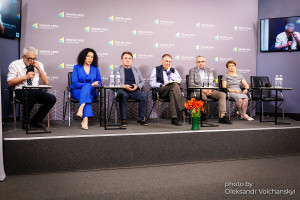
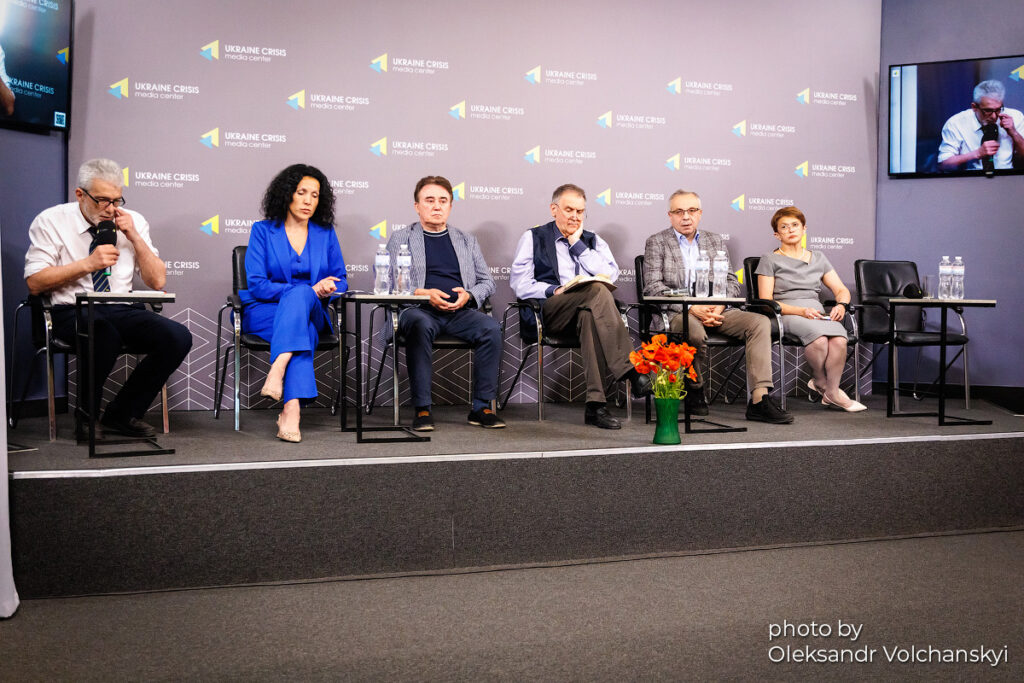
The opening of the exhibition “The Beginning of Ukraine’s Resistance: Defense of Luhansk Airport” at Kontraktova Square in Kyiv marked not the conclusion, but rather the continuation of an important conversation about the events of 2014. Later that day, the Ukraine Crisis Media Center hosted a thematic discussion entitled “First Battles of Ukraine’s War of Independence in the Luhansk Region”, organized by the Ukrainian Institute of National Remembrance.
In April 2014, following the seizure of administrative buildings in Luhansk by pro-Russian forces, the Ukrainian military took control of Luhansk International Airport. Its subsequent defense became one of the first symbols of organized resistance to Russian aggression and demonstrated the Ukrainian state’s determination and ability to defend its territory. The significance of this battle, the lessons it offers, and its place in historical memory formed the core of the discussion.
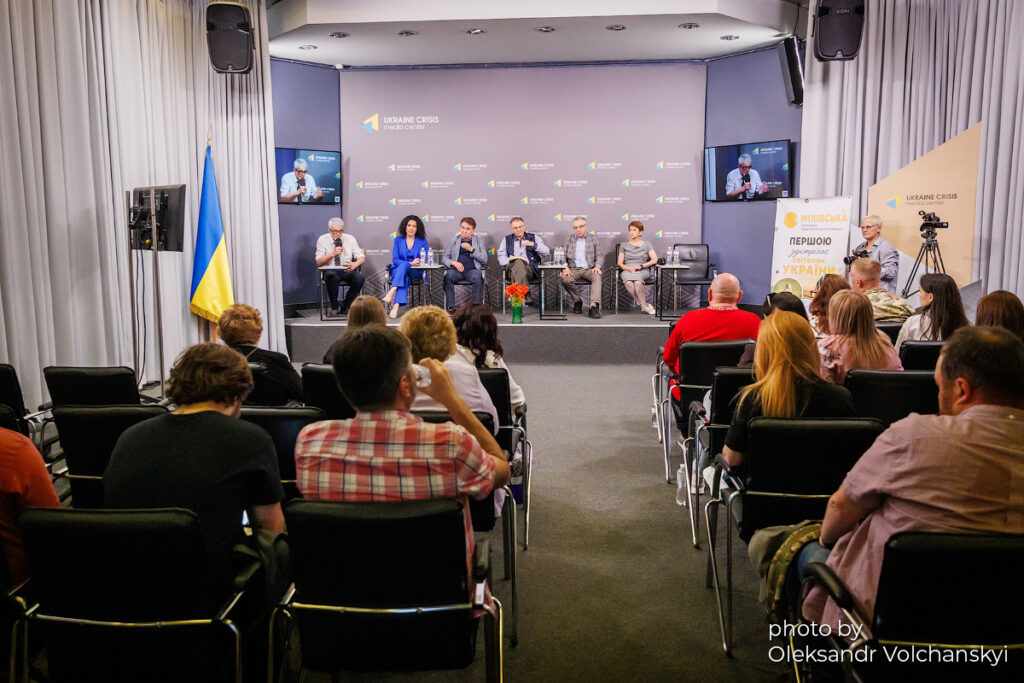
The conversation focused not only on military events but also on the people behind them – their choices, responsibility, dignity, and resilience. Participants reflected on the lessons Ukraine learned from the events of 2014, as well as those lessons that the wider international community has yet to fully grasp.
One of the discussion’s greatest strengths was the diversity of perspectives represented at the table. Historians, scholars, security researchers, public figures, and experts working directly on de-occupation, memory policy, and state-building came together to examine the past while considering its implications for Ukraine’s future.
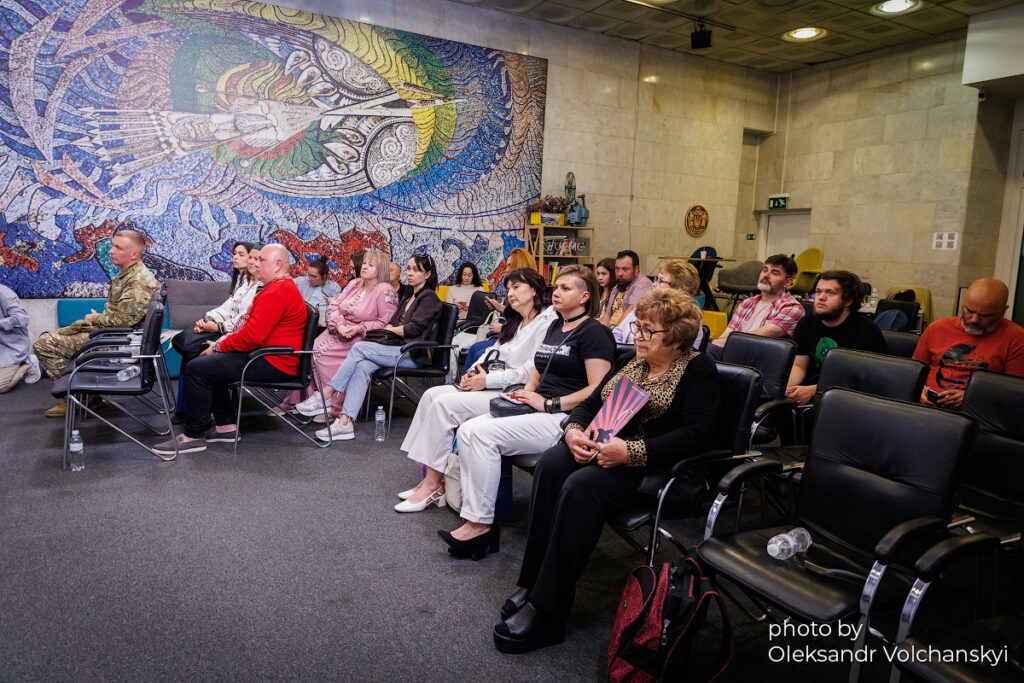
A central theme of the discussion was the role of the Luhansk region as one of the first regions to experience the full force of Russian aggression. Participants emphasized the importance of preserving the memory of those who resisted, maintained their Ukrainian identity despite occupation and displacement, and contributed to Ukraine’s struggle for independence.
Volodymyr Tylishchak, Deputy Head of the Ukrainian Institute of National Remembrance, stressed that the events of 2014–2015 laid the foundation for the resilience demonstrated by Ukraine in subsequent years. He argued that the first years of the Russo–Ukrainian War must not be overshadowed by later developments, as they shaped the conditions for the country’s current resistance and national unity.
Lidiia Smola, Doctor of Political Sciences and researcher of political psychology, information security, and societal responses to threats, highlighted that the experience of the war’s early years has helped Ukrainians develop a stronger sense of themselves as a mature political nation. According to her, the memory of these events contributes to shaping a vision of Ukraine as a future victor rather than merely a victim of aggression.
Vitalii Kurylo, First Vice-Rector of Taras Shevchenko Luhansk National University, Chair of the University Academic Council, Doctor of Pedagogical Sciences, and Professor, emphasized that the defense of Luhansk Airport served as an important signal to local communities that the Ukrainian state remained present and capable even under the most difficult circumstances. He also underscored the role of education and scholarship in preserving the memory of the war.

An important part of the discussion focused on understanding the events of 2014 within the broader context of Russian aggression against Ukraine.
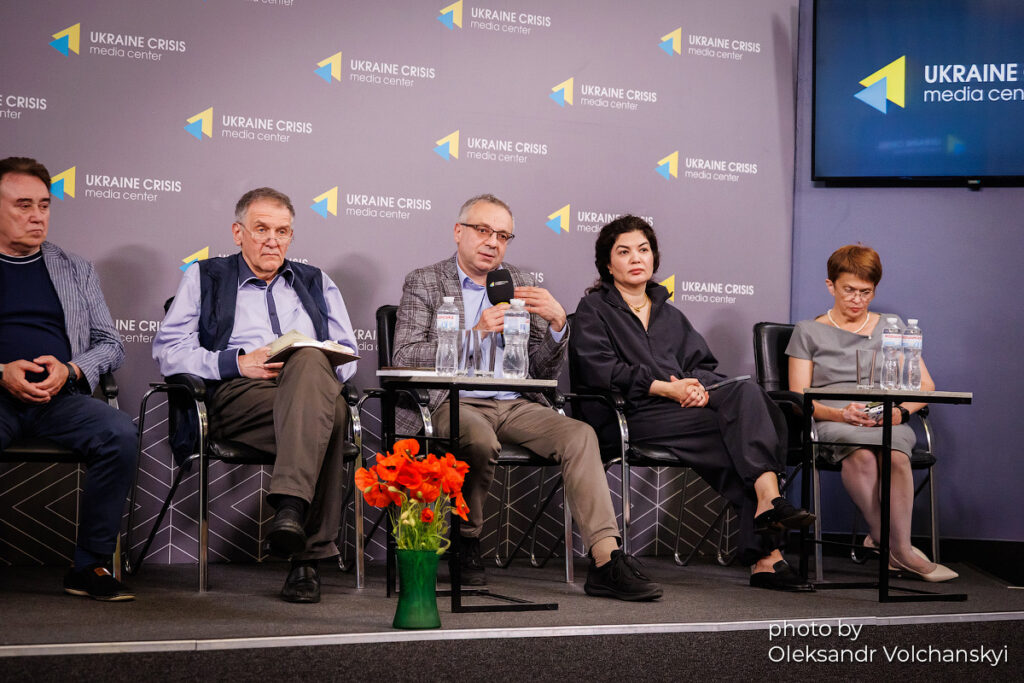
Tamila Tasheva, a public and government figure, human rights advocate, and researcher specializing in temporarily occupied territories, de-occupation processes, and state policy on Crimea, emphasized that the story of resistance in the Luhansk region cannot be separated from developments in Crimea and other territories that were among the first to experience Russian occupation. She argued that preserving the memory of the war’s early stages is an essential component of de-occupation, the restoration of justice, and the development of a shared vision for Ukraine’s future.
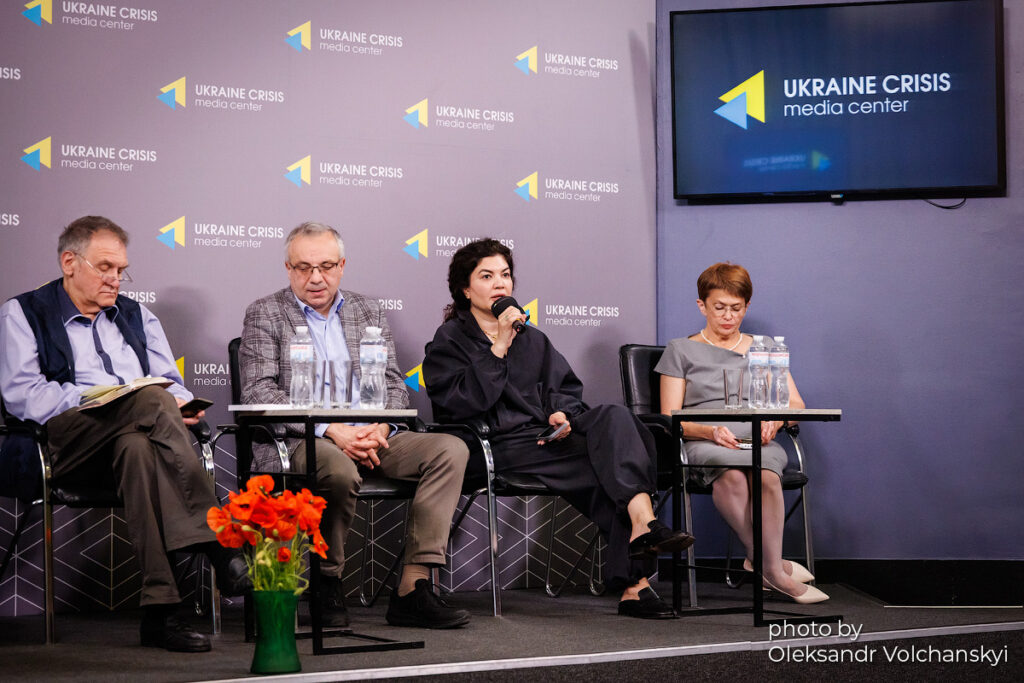
Oleksii Haran, Doctor of Historical Sciences, Professor of Political Science at the National University of Kyiv-Mohyla Academy, Academic Adviser to the Democratic Initiatives Foundation, and a leading scholar of Ukrainian politics and international relations, stressed the importance of challenging narratives imposed by Russian propaganda.
He emphasized that the events of 2014 were not an “internal conflict,” as Russia sought to portray them, but an act of external aggression against Ukraine. According to Haran, documenting these events, preserving eyewitness testimonies, and promoting historical truth remain essential tasks for both Ukrainian society and the international community.
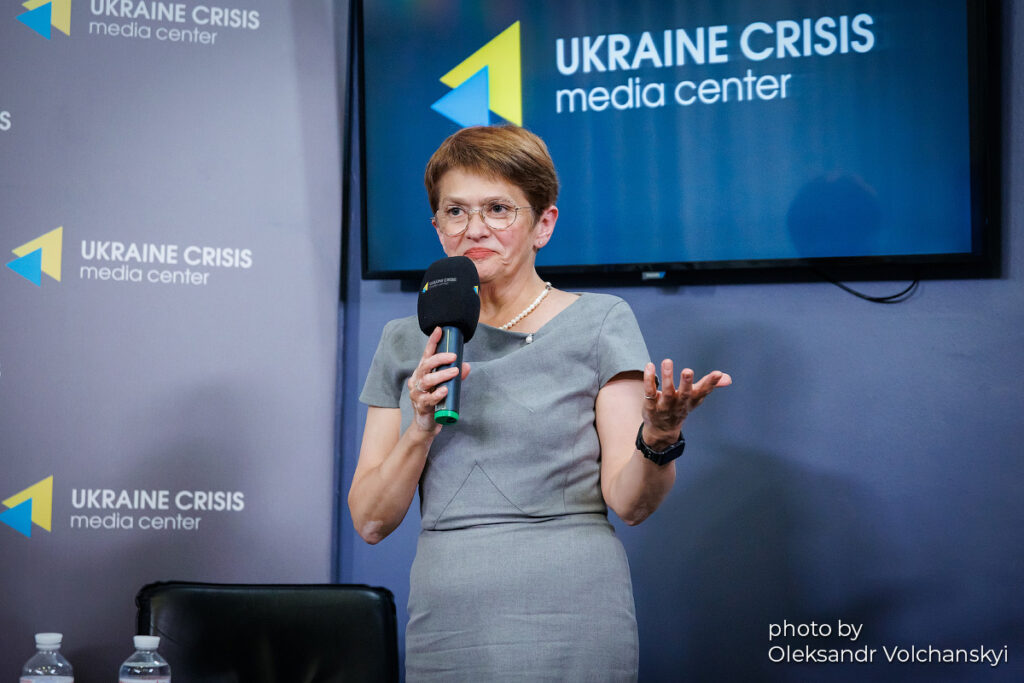
Oleksandra Liashenko, Professor at Taras Shevchenko Luhansk National University and founder of the Security Thinking project, noted that the struggle for strategic infrastructure in the east of Ukraine effectively began with the defense of Luhansk Airport. She emphasized that the story of the airport’s defenders is important not only for preserving the memory of the war’s beginning, but also for fostering security thinking, strengthening a culture of responsibility, and understanding the experience of the Luhansk region as one of the first regions confronted with Russian aggression. Particular attention was given to the themes of cognitive de-occupation, human dignity, and the role of memory in strengthening societal resilience.
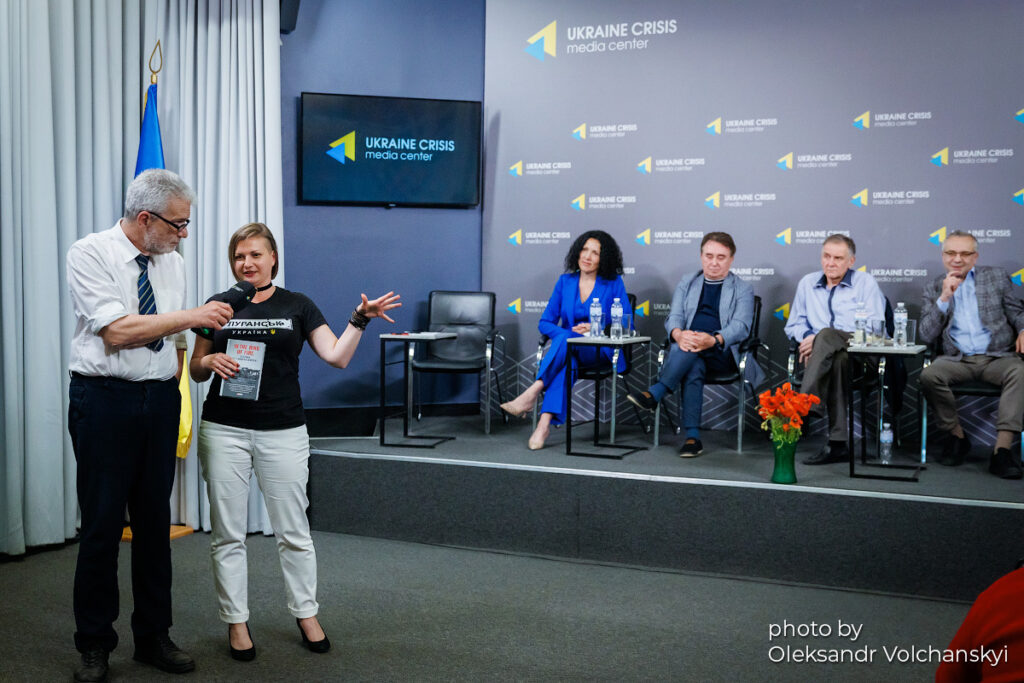
The discussion was moderated by Andrii Kulykov, journalist, media expert, and co-founder of Hromadske Radio. His professionalism, deep understanding of social processes, and unique ability to facilitate meaningful dialogue helped create an atmosphere that combined academic rigor with genuine human engagement. The discussion demonstrated how different experiences, generations, and professional perspectives can come together around a shared commitment to memory, responsibility, and Ukraine’s future.
Participants expressed their conviction that this conversation should continue through new research, educational, memorial, and international initiatives dedicated to the history of Ukrainian resistance in the Luhansk region. The memory of the defense of Luhansk Airport is not only a matter of the past; it is also an important resource for shaping Ukraine’s future.

Photos by Oleksandr Volchanskyi