Big Brother is Back? How Can Democracy Survive in Times of AI and Great Powers
Source: Mission of the President of Ukraine in the Autonomous Republic of Crimea
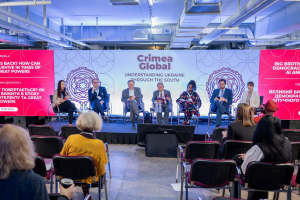
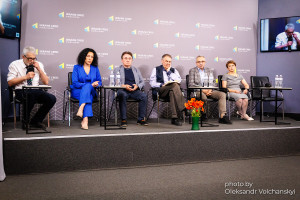
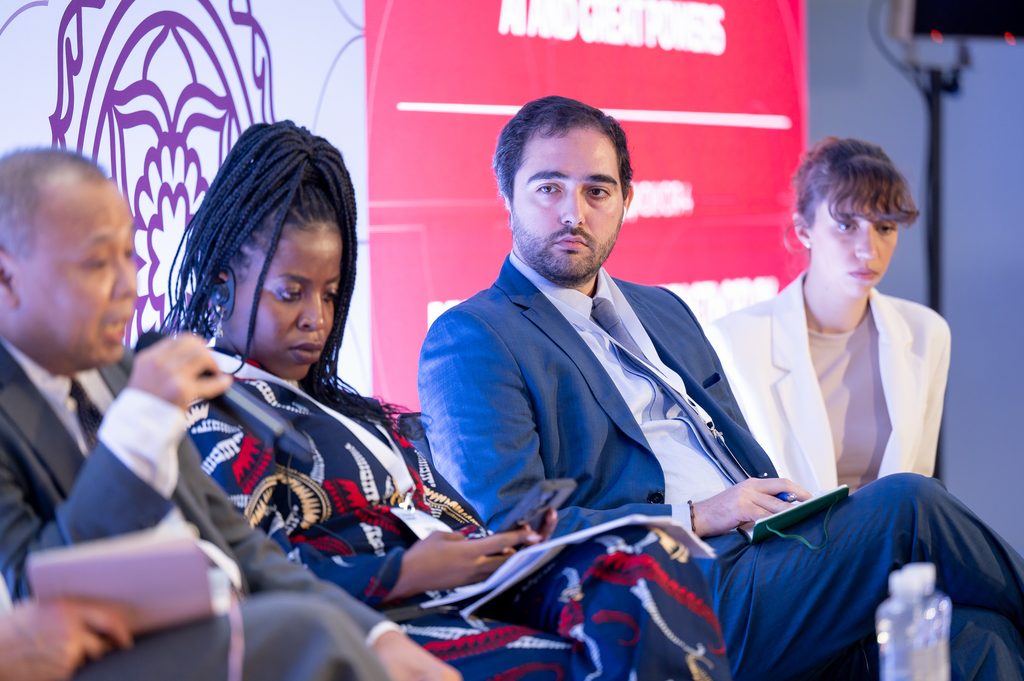
At the fourth panel discussion of the international conference “Crimea Global. Understanding Ukraine through the South” in Kyiv, participants from Ukraine, Egypt, Myanmar, Kenya and Brazil discussed how artificial intelligence affects democracy, freedom of expression and the work of human rights defenders and journalists amid rising authoritarianism. The discussion was moderated by Tetiana Pechonchyk, Head of the Board of the Human Rights Centre ZMINA and co-organiser of the Crimea Global conference.
Over the past year, competition among great powers has become an increasingly significant factor in international politics, while the role of international law and multilateral institutions continues to weaken. For Ukraine, this trend became apparent as early as 2014, following Russia’s occupation of Crimea, and has since intensified as international accountability mechanisms have weakened, the International Criminal Court has come under attack, and international court decisions and UN resolutions have increasingly been disregarded.
At the same time, artificial intelligence is transforming the struggle for democracy and human rights. It offers new opportunities for civic activists, journalists and human rights defenders, while also providing authoritarian regimes with powerful tools for surveillance, propaganda and repression.

Mohamed Lotfy, Executive Director of the Egyptian Commission for Rights and Freedoms, drew attention to the rise of authoritarianism in countries around the world. According to him, Egypt, where torture is systematic, is an example of how far repression can go. He also recalled that freedom of expression existed in the country in the 1950s and 1960s, but democratic principles are now gradually being eroded.
At the same time, he urged people not to focus solely on the threats posed by artificial intelligence, but also to harness new technologies to support human rights defenders and civil society.
Dr. Olexiy Haran, Professor of Comparative Politics at the University of Kyiv Mohyla Academy, highlighted the differences between the political systems of Ukraine and Russia.
According to Haran, over 35 years of independence, Ukraine has developed civil society organisations and volunteer movements that play an important role in resisting Russian aggression. He also highlighted the role of international donors in supporting Ukrainian civil society.
Soe Myint, Managing Director and Editor-in-Chief of Myanmar-based media outlet Mizzima, discussed the practical applications of AI. According to him, Mizzima, founded 27 years ago as one of the country’s first online news outlets, already uses AI tools developed by American and Chinese companies. In particular, AI agents assist with human resources tasks, report preparation and the analysis of management trends.
The journalist also highlighted the challenges posed by the spread of disinformation, including that used by Russia. According to him, media outlets must constantly adapt to new technologies and remain competitive amid their rapid development.
He also emphasised the importance of training AI systems to understand minority languages. In ethnically diverse Myanmar, technology must take into account not only the needs of the majority but also the linguistic rights of minority communities.
Speaking about the broader struggle for democracy, Soe Myint also drew attention to cooperation between authoritarian regimes, military brutality and the danger of even countries with democratic traditions increasingly engaging with dictatorships. He stressed that the future of democracy depends not only on technology but also on the ability of different ethnic, religious and social groups to coexist, engage in dialogue and defend their rights together.
Sophie Mugure Njehia, a youth leader, political communicator and civic activist from Kenya, spoke about the 2024 protests against the Finance Bill, which reflected broader public dissatisfaction with corruption and the actions of the authorities.
According to Njehia, young people used social media to organise themselves, as these platforms allowed them to coordinate protests without substantial financial resources. At the same time, digital platforms also became tools for monitoring activists: the authorities could track when and where protests were planned and prepare to suppress them.
The activist also described how technology was used to track the whereabouts of protesters. According to her, this increased the risks faced by young people taking part in demonstrations, some of whom were killed in acts of violence.
Sophie Mugure Njehia identified the verification of voter registers and the establishment of an independent system for parallel vote tabulation as potential applications of artificial intelligence. She stressed that young people and women are often afraid to participate in political life because of the threat of violence, and that technology should therefore help safeguard democratic processes and ensure government accountability.
Pedro Rafael Pérez de Azevedo, President of the Association of Young Entrepreneurs of the State of Rio de Janeiro, who is of Venezuelan origin, drew parallels between Venezuela’s experience, where authoritarian tendencies began to intensify in the late 1990s, and the challenges facing democracies today, particularly in Brazil.
According to Pérez de Azevedo, authoritarian leaders may come to power amid public demands for change, but this can eventually lead to a profound political, economic and social crisis. He stressed that Venezuela’s experience serves as an important warning to other countries.
Pedro Rafael Pérez de Azevedo also focused on the impact of artificial intelligence and social media on electoral processes. In his view, technology makes it possible to produce disinformation and propaganda at virtually no cost, influencing voters’ decisions.
He also highlighted the risk of technology being used to manipulate public opinion and restrict citizens’ access to reliable information about the political situation in the country.