“They removed the auditor, not the thieves”: why Ukrainians are protesting Zelenskyy’s reshuffle
Euromaidan Press, 17 July 2026
“It was about personal loyalty”
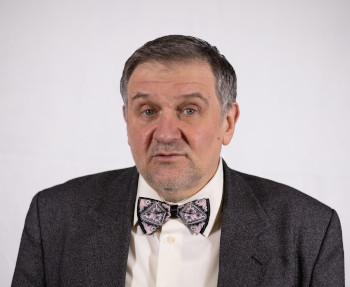
Oleksiy Haran, professor of comparative politics at the National University of Kyiv-Mohyla Academy and research director at the Ilko Kucheriv Democratic Initiatives Foundation, told Euromaidan Press the search for a policy rationale starts from the wrong end.
The problem is not this reshuffle, he argued, but where decisions get made: in the Office of the President, on Bankova Street—under Zelenskyy and, before his dismissal, under his chief of staff Andriy Yermak. “Definitely, it was about personal loyalty,” Haran said.
In his reading, this is a system Zelenskyy built and cannot imagine running any other way: the president “is not democratic in essence” and believes himself a “messianic leader”—a self-conception dented by early wartime failures, then restored by success.Haran also punctured the “wholesale purge” framing that dominated the week’s commentary. Much of the Cabinet simply stayed or shuffled sideways. “They are just moving around,” he said. Zelenskyy speaks of a new political approach, Haran noted—“but what’s that approach about? I don’t see it.”
One appointment inside that Cabinet showed the deeper pattern. The Digital Transformation Ministry—the body that built the e-governance and digitized document app Diia and reorganized the state around it—appointed Oksana Ferchuk, the first person to lead it who was not part of Fedorov’s founding team.
As Ukrainska Pravda noted, the ministry’s reach had leaned less on its projects than on Fedorov’s political weight and his direct line to the president—a reach Fedorov himself credited to Zelenskyy’s backing.here is a deeper reading: that inner-circle rule is the inheritance of Soviet institutional distrust and the lawless 1990s, when only personal networks could be relied on. Haran is skeptical of the tidy version.
Many Soviet citizens believed the system’s promises of justice, he noted, and Ukrainians’ distrust of state institutions is a long-run trend that predates Zelenskyy rather than a trait he personally embodies. What the war changed, he added, is that trust rose toward the army, the security services, and the anti-corruption bodies.